
The Abraham Accords, signed in 2020, were agreements between Israel and several Arab countries (the United Arab Emirates, Bahrain, Sudan, and Morocco) to normalize relations. However, Pakistan has not publicly expressed its willingness to accept or join the Abraham Accords, perhaps due to the public backlash that has been reported. Pakistan’s stance on Israel and the Abraham Accords is stuck between yes and no. That is, there is no formal indication of acceptance. Apparently, even after a few political elements met, Pakistan has not announced any intention to join the Abraham Accords or normalize relations with Israel, but the intentions and statements are not beyond suspicion. While Pakistan traditionally supports Palestinian rights and has not officially recognized Israel so far. While media outlets report on international agreements like the Abraham Accords, there is no clear indication that the Pakistani media is promoting Pakistan’s acceptance of these agreements, while some negative indications have reached us through social media on the basis of which they are being discussed. If we look at the Abraham Accords, in context, such agreements have The agreements, which marked a change in relations between the two countries, focused on cooperation in areas such as trade and security. They were seen as a development in Middle East diplomacy, although they did not resolve the Israeli-Palestinian conflict. If we try to understand the Abraham Accords, Pakistan’s foreign policy, or related regional issues, such agreements have no status in the light of the teachings of Islam. As for Pakistan, nothing is impossible for the current military leadership. The past, the present, the future are in front of us and whatever is to happen will soon become apparent.
معاہدہ ابراہام پر ,کیا پاکستان کی جانب سے مثبت اشارے مل گئے ہیں ؟
2020 میں دستخط کیے گئے ابراہیم معاہدے، تعلقات کو معمول پر لانے کے لیے اسرائیل اور کئی عرب ممالک (متحدہ عرب امارات، بحرین، سوڈان اور مراکش) کے درمیان معاہدے تھے۔ تاہم، پاکستان نے عوامی طور پر ابراہم معاہدے کو قبول کرنے یا اس میں شامل ہونے کے لیے آمادگی ظاہر نہیں کی تھی شاید عوامی ردعمل سخت اور منفی آنے کی اطلاع ہو۔اسرائیل اور ابراہیم معاہدے پر پاکستان کا موقف ہاں یا ناں کے درمیان پھنسا ہوا ہے۔یعنی قبولیت کا کوئی اشارہ باضابطہ نہیں ہے۔بظاہر تو چند سیاسی عناصر کی میل ملاقات کے بعد بھی پاکستان نے ابراہم معاہدے میں شامل ہونے یا اسرائیل کے ساتھ تعلقات کو معمول پر لانے کے کسی ارادے کا اعلان نہیں کیا ہے لیکن ارادے اور بیانات شکوک وشبہات سے بالاتر نہیں۔جبکہ پاکستان روایتی طور پر فلسطینیوں کے حقوق کی حمایت کرتا ہے اور اس نے اسرائیل کو باضابطہ طور پر اب تک تسلیم نہیں کیا ہے۔جب کہ میڈیا آؤٹ لیٹس ابراہم معاہدے جیسے بین الاقوامیجیسے بین الاقوامی معاہدوں کی رپورٹنگ کرتے ہیں، لیکن اس بات کا کوئی واضح اشارہ نہیں ہے کہ پاکستان کا میڈیا ان معاہدوں کی پاکستان کی قبولیت کو فروغ دے رہا ہے جبکہ کچھ منفی اشارے سوشل میڈیا کے ذریعے ہم تک پہنچے ہیں جس کی بنیاد پر بات کی جا رہی ہے۔اگر ابراہیم معاہدے کو دیکھا جائے تو سیاق و سباق کے مطابق اس طرح کے معاہدوں نے اسرائیل اور کچھ عرب ممالک کے درمیان تعلقات میں تبدیلی کی نشاندہی کی، تجارت اور سلامتی جیسے شعبوں میں تعاون پر توجہ مرکوز کی معاہدوں کو مشرق وسطیٰ کی سفارتکاری میں ایک ترقی کے طور پر دیکھا گیا، حالانکہ ان سے اسرائیل فلسطین تنازعہ حل نہیں ہوا۔اگر ہم، ابراہم معاہدے، پاکستان کی خارجہ پالیسی، یا متعلقہ علاقائی معاملات کو جاننے کی کوشش کریں تو دین اسلام کی ہدایات کی روشنی میں اس طرح کے معاہدوں کی کوئ حیثیت نہیں، رہی بات پاکستان کی تو موجودہ فوجی قیادت کے لیے کچھ بھی نا ممکن نہیں ماضی حال مستقبل سامنے ہے اور جو کچھ ہونا ہے کچھ ہی وقت میں اظہر من الشمس ہو جائے گا۔
پاکستان کے نقصانات کا زمہ دار کون ہے ؟
پاکستان کو درحقیقت فوجی مداخلتوں اور تنازعات کی وجہ سے خاص طور پر امریکی قیادت میں دہشت گردی کے خلاف جنگ کے تناظر میں کافی نقصان اٹھانا پڑا ہے۔تخمینے بتاتے ہیں کہ دہشت گردی کے خلاف جنگ کی وجہ سے پاکستان کا معاشی نقصان 123.1 بلین ڈالر سے لے کر 150 بلین ڈالر تک ہے، کچھ رپورٹس میں 252 بلین ڈالر تک کے اعداد و شمار کا حوالہ بھی دیا گیا ہے۔ یہ نقصانات بنیادی ڈھانچے کو پہنچنے والے نقصان، غیر ملکی سرمایہ کاری میں کمی اور صنعتی پیداوار سے منسوب ہیں۔
اس تنازعے کے نتیجے میں 70,000 سے زیادہ پاکستانی جانیں ضائع ہو چکی ہیں، اور بہت سے زخمی یا بے گھر ہو چکے ہیں۔ جنگ نے ملک کے سماجی تانے بانے اور معاشی ترقی پر بھی گہرا اثر ڈالا ہے۔پاکستان کی معیشت کو مبینہ طور پر تنازعات کی وجہ سے اس کی جی ڈی پی کا تقریباً 3% سالانہ نقصان ہوا ہے، جس کا مطلب یہ ہے کہ اہم اقتصادی مواقع ضائع ہوئے۔پاکستان اکنامک سروے کے مطابق، ملک کو سالانہ اوسطاً 7.7 بلین ڈالر کا نقصان ہوا، جو کہ تعلیم، صحت اور دیگر سماجی تحفظ کی اسکیموں پر ملک کے کل اخراجات سے زیادہ ہے۔
کچھ قابل ذکر واقعات اور خدشات میں شامل ہیں پاکستان کو متعدد دہشت گرد حملوں کا سامنا کرنا پڑا ہے، جس کے نتیجے میں اہم انسانی تکالیف اور معاشی نقصانات ہوئے ہیں۔ملک نے دہشت گردی سے نمٹنے اور بقایا خطرات کو ختم کرنے کے لیے ضرب عضب اور ردالفساد سمیت متعدد فوجی آپریشن شروع کیے ہیں۔
پاکستان نے افغانستان میں امریکی زیر قیادت اتحادی افواج کے ساتھ تعاون کیا ہے، لاجسٹک مدد فراہم کی ہے اور اس کی فضائی حدود اور فوجی اڈوں تک رسائی فراہم کی ہے۔
Pakistani tax evaders are being caught for non-payment of taxes in London
By: Masood Hussain Geffery

https://isj.org.pk/dawn-editorial-tax-evaders/
Hi-tech crimes have increased a lot in Pakistan
By: Masood Hussain Geffery
A very concerning issue! Hi-tech crimes, also known as cybercrimes, have indeed increased significantly in Pakistan in recent years.
Types of Hi-Tech Crimes:
1. Cyber hacking: Unauthorized access to computer systems, networks, or data.
2. Identity theft: Stealing personal information, such as passwords, credit card numbers, or social security numbers.
3. Online fraud: Scams, phishing, and other types of online deception.
4. Cyberstalking: Harassment or threats made through digital platforms.
5. Data breaches: Unauthorized access or theft of sensitive data.
Reasons for the Increase:
1. Rapid digitization: Pakistan’s increasing reliance on digital technologies has created new vulnerabilities.
2. Lack of cybersecurity infrastructure: Inadequate measures to protect against cyber threats.
3. Limited awareness: Many Pakistanis are not aware of the risks associated with online activities.
4. Weak law enforcement: Difficulty in investigating and prosecuting cybercrimes.
Consequences:
1. Financial losses: Cybercrimes can result in significant financial losses for individuals and businesses.
2. Reputational damage: Cyber attacks can damage an organization’s reputation and erode trust.
3. National security risks: Cyber threats can compromise national security and critical infrastructure.
Efforts to Combat Hi-Tech Crimes:
1. Cybersecurity laws: Pakistan has enacted laws, such as the Prevention of Electronic Crimes Act (PECA), to combat cybercrimes.
2. Cybersecurity agencies: The Federal Investigation Agency (FIA) and other agencies are working to investigate and prosecute cybercrimes.
3. Awareness campaigns: Efforts are being made to raise awareness about cybersecurity and the risks associated with online activities.
While progress is being made, more needs to be done to combat the growing threat of hi-tech crimes in Pakistan.
Special thanks for INN. International News Network
عمران خان جان بوجھ کر جیل میں بیٹھا ہے
ملک میں آئے روز مسخروں کی دنیا اور ٹوٹ بٹوٹ جیسی صورت حال پیدا ہوگئی ہے
رجیم چینج کے بعد جس مخلوق کو مسلط کیا گیا اس مخلوق کا مسخرہ پن دیکھتے ہوئے مدت بیت گئ روز کوئ نا کوئ ایسا رٹا رٹایا اسکرپٹ میڈیا کے سامنے باوضو پڑھا جاتا ہے جسے سن پڑھ کر مسخروں کی دنیا یا ٹوٹ بٹوٹ جیسی صورت حال پیدا ہو جاتی ہے حال ہی میں ایک لطیفہ اخبارات میں شائع کیا گیا تھا جس کے تناظر میں ہم تو صرف یہی کہہ سکتے ہیں۔
عمران خان کی گرفتاری اور نظر بندی تنازع اور بحث کا موضوع رہی ہے۔ 9 مئی 2023 کو، خان کو اسلام آباد ہائی کورٹ کے اندر سے قومی احتساب بیورو (نیب) نے القادر ٹرسٹ سے متعلق بدعنوانی کے الزام میں گرفتار کیا تھا۔¹ تاہم، سپریم کورٹ آف پاکستان نے اس گرفتاری کو غیر قانونی قرار دیتے ہوئے ان کی فوری رہائی کا حکم دیا۔یہ بات قابل غور ہے کہ خان فوجی اسٹیبلشمنٹ پر تنقید کرتے رہے ہیں اور ان پر ان کی گرفتاری میں ملوث ہونے کا الزام لگاتے رہے ہیں۔اس صورتحال نے پورے پاکستان میں بڑے پیمانے پر احتجاج اور بدامنی کو جنم دیا ہے، خان کے بہت سے حامی ان کی گرفتاری کو سیاسی طور پر محرک سمجھتے ہیں۔اس بات کا کوئی ثبوت نہیں ہے کہ عمران خان جان بوجھ کر جیل میں بیٹھے ہیں۔درحقیقت، انہیں 12 مئی 2023 کو اسلام آباد ہائی کورٹ نے ضمانت دی تھی، اور حراست سے رہا کر دیا گیا تھا۔
What action can Britain take on the open violation of human rights in Pakistan?
Britain can take several steps to address the open violation of human rights in Pakistan.
- Diplomatic Pressure: The UK government can convey its concerns to the Pakistani government at the highest level, urging them to take immediate action to address human rights abuses.¹ ²
- Supporting International Investigations: Britain can support international investigations into human rights violations in Pakistan, such as those conducted by the United Nations Human Rights Committee (UNHRC).³ ⁴
- Providing Humanitarian Aid: The UK can provide humanitarian aid to organizations working to support victims of human rights abuses in Pakistan.
- Raising Awareness: British lawmakers and citizens can raise awareness about human rights issues in Pakistan, using platforms like the UK Parliament’s Early Day Motions.
- Economic Leverage: The UK can use its economic influence to pressure Pakistan to improve its human rights record, such as by conditioning trade agreements or aid packages on human rights progress.
By: Masood Hussain Geffery S
Special thanks for
INN: International News Network
Can the British government prosecute and punish the accused for human rights violations and massacres in Pakistan?
The British government’s ability to prosecute and punish individuals accused of human rights violations and massacres in Pakistan is limited by several factors.
- Jurisdictional constraints: The UK’s jurisdiction primarily extends to crimes committed within its territory or by its citizens. Prosecuting crimes committed in Pakistan would require cooperation from Pakistani authorities or reliance on international law principles like universal jurisdiction.¹
- International law limitations: While international law obliges states to investigate and prosecute gross human rights violations, its enforcement is often hindered by political and diplomatic complexities. The UK would need to navigate these complexities to pursue prosecution.
- Cooperation with Pakistani authorities: Effective prosecution would likely require cooperation from Pakistani authorities, which may be challenging given the country’s history of military rule and complex politics.
That being said, there are some avenues the British government could explore:
- Universal jurisdiction: The UK could invoke universal jurisdiction principles, which allow states to prosecute individuals for certain international crimes regardless of where they were committed or the nationality of the perpetrator.
- International cooperation: The UK could work with international organizations, like the United Nations, to support investigations and prosecutions related to human rights violations in Pakistan.
- Diplomatic pressure: The British government could exert diplomatic pressure on Pakistan to investigate and prosecute those responsible for human rights violations.
Ultimately, while there are potential avenues for the British government to pursue, the complexities of international law and politics mean that prosecution and punishment are far from guaranteed.
By: Masood Hussain Geffery
Special thanks for international News Network agency
The bogus government is grossly disgraced in the outside world
A strong sentiment! The Pakistani government’s reputation has indeed been impacted by various factors, including concerns over human rights, corruption, and governance.These issues have attracted international attention and criticism, affecting the country’s image abroad.Some specific incidents and issues that may have contributed to this perception include.Human rights concerns.Allegations of human rights abuses, particularly in Balochistan and Kashmir, have drawn international criticism.Corruption Corruption remains a significant challenge in Pakistan, with the country ranking 140 out of 180 in Transparency International’s 2021 Corruption Perceptions Index.Governance issues.Concerns over the rule of law, judicial independence,judicial independence, and the influence of the military on politics have also impacted the government’s reputation.These challenges have led to increased scrutiny from the international community, including.UN reports The United Nations has published reports highlighting human rights concerns and other issues in Pakistan.Western criticism Western countries, including the United States and the United Kingdom, have expressed concerns over Pakistan’s human rights record and governance.Media coverage International media outlets have reported on various issues in Pakistan, contributing to a negative perception of the government.To address these challenges and improve its reputation, the Pakistani government must prioritize governance reforms, human rights protection, and transparency.
By: Masood Hussain Geffery
Special thanks for International News Network
Why did the incidents of terrorism in Pakistan increase once again?
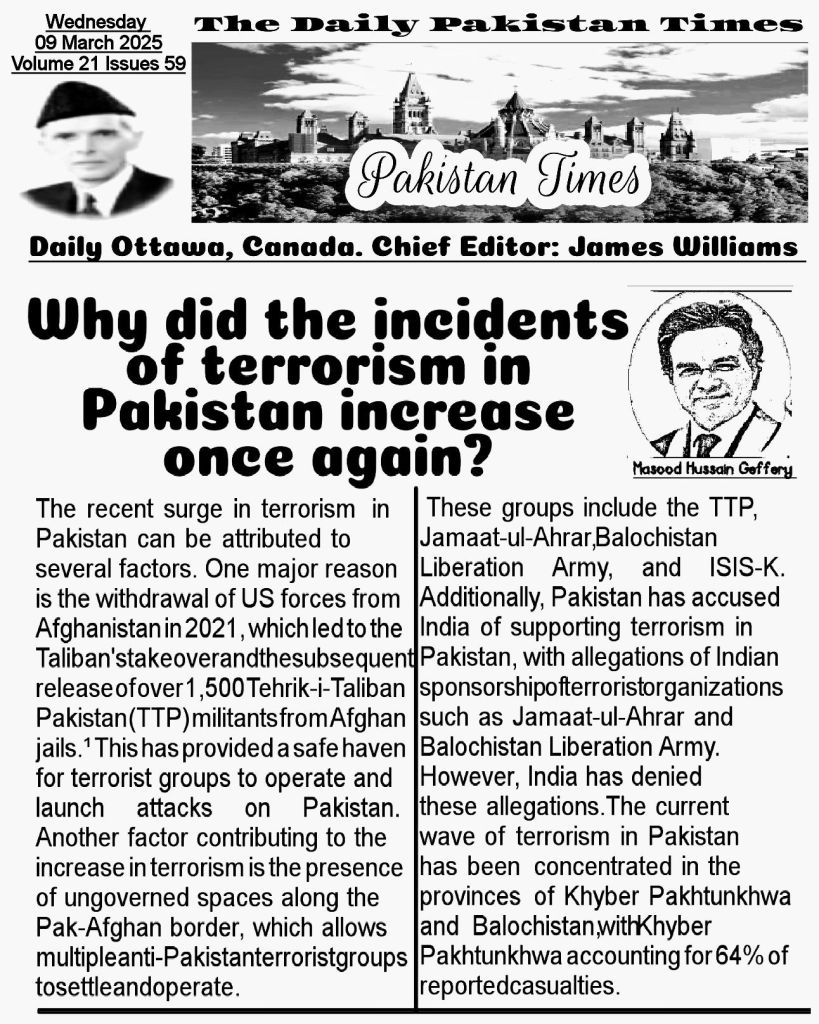
Another factor contributing to the increase in terrorism is the presence of ungoverned spaces along the Pak-Afghan border, which allows multiple anti-Pakistan terrorist groups to settle and operate. These groups include the TTP, Jamaat-ul-Ahrar, Balochistan Liberation Army, and ISIS-K.
Additionally, Pakistan has accused India of supporting terrorism in Pakistan, with allegations of Indian sponsorship of terrorist organizations such as Jamaat-ul-Ahrar and Balochistan Liberation Army. However, India has denied these allegations.
The current wave of terrorism in Pakistan has been concentrated in the provinces of Khyber Pakhtunkhwa and Balochistan, with Khyber Pakhtunkhwa accounting for 64% of reported casualties.
Special thanks for
The Daily Pakistan Times. Ottawa (Canada).
Prof Masood Hussain Geffery


You must be logged in to post a comment.